
Originally posted on 09.28.13
This “Paratrooper for a Day” event was moving from good to great!
Following the success and elation of the jump tower, we moved on to our next activity, the obstacle course. Ever since I was a 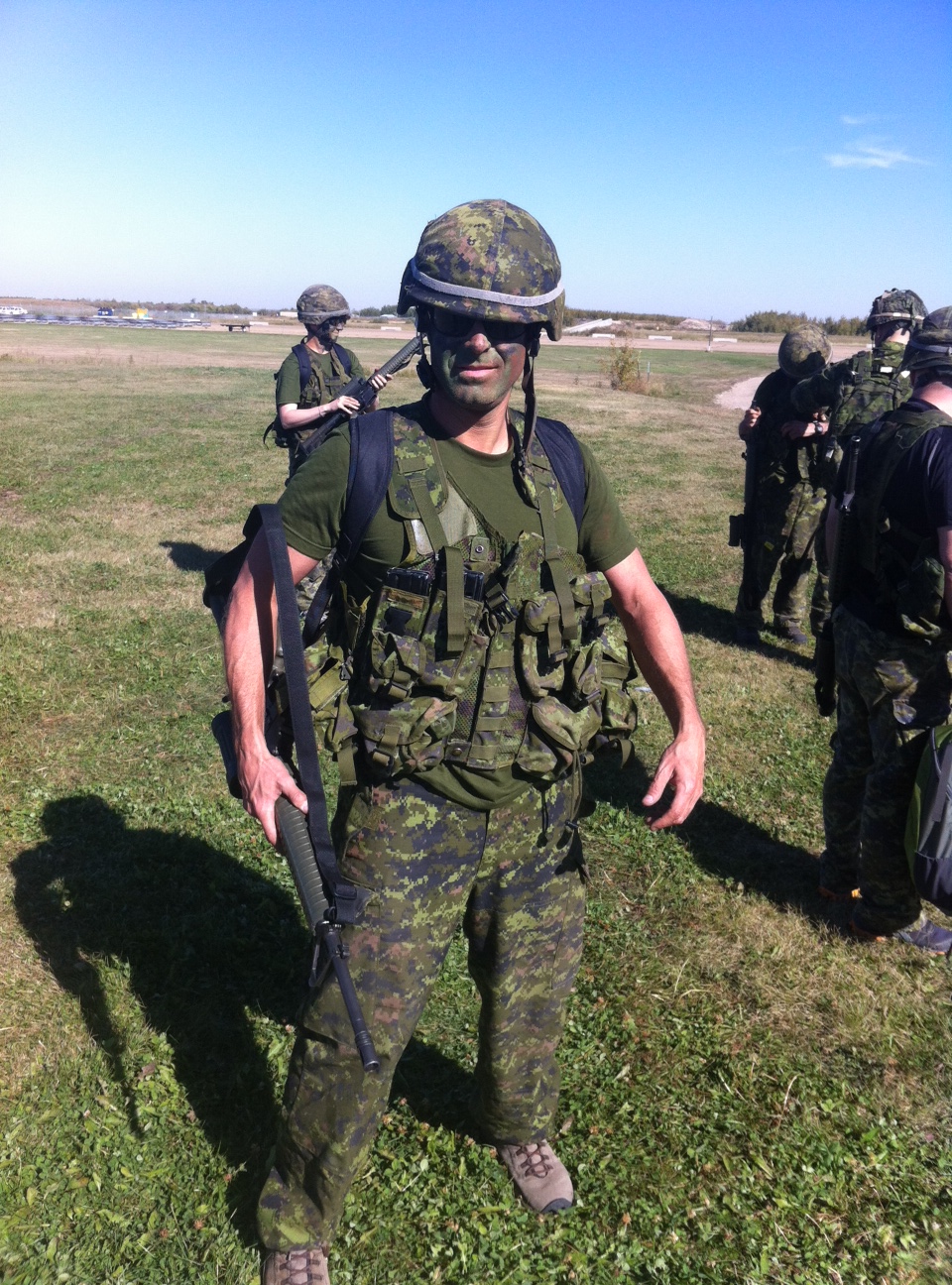 young boy, I’ve loved physical challenges of this nature. Obstacles courses are like a game, designed to combine all aspects of physicality – strength, endurance, balance, technique, speed and will. I like this sort of thing…its fun to see “what I’ve got”.
By now, I’d come to appreciate the Paratrooper approach to new things: you are taught first, and ‘motivated’ second. It’s a bit of a contrast to what I’d envisioned – expecting that there’d be a lot of yelling and horsewhipping with words like “improvise!” and “figure it out!” being screamed at high volume. Not so. There is a way to do things, a way that others have figured out over time, and it’s thoroughly taught, and then practiced. I guess it makes sense, as we do it this way in our businesses…
So, in consistent fashion, two soldiers went through the obstacle course first, teaching us how to navigate the challenges. They slowly explained each apparatus, including tips on hand holds and common mistakes. One of the demonstrators was Sergeant John Prior, our leader for the day, who you might remember had a broken hand. As our group walked beside the two soldiers demonstrating the course, I was gaining confidence in my abilities to do the course well… and dare I say, fast.
The plan was for us to walk through the course slowly first. No stop watch running, the goal was to just get a feel for the obstacles. We’d then run an individual race and conclude with putting a clock on our whole team, to see how fast we could get everyone through the course.
And so we started our walk through. It probably won’t surprise you to learn the obstacles were harder to do ourselves vs. watching others do them. That was to be expected. The first challenge was a swinging ladder climb, ascending to approximately 15 feet. The climb wasn’t that bad, but going over the top of the ladder that high up was nervous work. All of the sudden, things were slowing down.
The next obstacle of severe challenge was the classic ‘crawl along the ground with wire above you’ deal you see in every army training movie. On queue, the instructors were telling us to keep your butts down as we crab crawled 200 miles (okay, it was probably only 30 feet but it felt really long). If you’ve never done it, you wouldn’t believe how slow progress is and how severely winded one becomes from this activity. I was shocked at how hard this actually was. I was breathing hard upon completion, and the sweat was burning my eyes.
Coming out of the crawl, we were immediately presented with two balance based activities – not that difficult in their own right, but once winded and sweating profusely, it’s a different game. The ‘log walk’ (at 4 feet off the ground) isn’t made any easier by the fact it’s been buffed to a shine by years of challengers. Falling off half way through sucks, as you have to start again, with no momentum to assist in ascending the log ramp.
Remember, we’re still in the walk through. By the time we were HALF WAY through the course, two of our group members had physically succumb to the challenges (one’s asthma had acted up, and another’s old knee injury insisted they stop). The rest of us were drenched in sweat, bleeding from our arms, breathing heavily and the talking had completely ceased. Respect!
The second half of the course was harder and slower than the first. There was an 8 or 9 foot concrete wall that you had to jump (or climb up a friend’s knew / shoulder) to reach the top. You then pulled yourself up and over, hanging down the other side to make your drop only a few feet. The “Irish Bench” is another obstacle that could have stopped our group for an hour if we didn’t help each other over it. Only two of our group members could actually get up and over that thing without help from others. It was brutal.
The Tiger pit is just like what it sounds like. Live tigers, waiting to kill you. Well, not quite, but you do have to jump into a 7 foot deep pit, and then climb out the other side. The straight concrete walls offer no leverage, hand holds or mercy. The four ‘bleacher style’ steps you have to hop from one to the next are spread so far apart, you have to leave the lower step to jump/ascend to the next one. This particular challenge was more mental than physical, as the first two steps were relatively easy, but even though the next two steps were the same distance apart, at 5 and 8 feet high respectively, falling became a highly undesirable option. The risk caused you to pause and lose momentum…making the activity harder than it needed to be.
Suffice it to say, by the time 8 out of 10 of us finished the ‘walk through’ of the obstacle course (about 20 minutes after our start), we were winded, sweating profusely, bleeding from our arms and hands and relatively demoralized. Water was sought and our team spontaneously huddled about the reality of doing the course 2 more times. While 3 of us thought we had two more runs in us, the majority of the group voted to skip the personal time run through and move straight into the group time trial. There was little resistance from the guys thinking 2 more times was achievable.
Being a competitive guy, and wanting to know where ‘the bar’ was, I asked what time the Paratroopers would expect to get a group through the course. We were told that individual times range from 4 – 5 minutes and a group time was often in the 8 – 9 minute range. The soldiers suggested we should try to beat 12 minutes…and reminded us that the clock doesn’t stop until our last man crosses the line. Something about ‘team work’…
Once the heavy breathing from the walk through stopped and we were ready to go, the clock started. Our group now had the motivation of the clock and some familiarity with the course. That, combined with the assistance we provided each other to move the team through each obstacle had us moving almost exactly to a 12 minute pace. By half way through, we were at 6 minutes, but knew the hardest stuff was still to come. It was fun and exciting to drive the group through the course…and the pain and exhaustion was muted (slightly) by our competitive fire to beat 12 minutes.
Things got sloppy and slow in the final sections of the course. Our painted green faces were streaked with sweat and grimace, as we pushed on. I’d like to give a specific shout out to my 71 year old father, Bruce Halliday, who navigated every obstacle and kept moving forward with the group. Amazing to see him demonstrate that fitness and health are a long-term game, not a moment in time. Amazing man, he’s truly a marvel.
As the clock ticked towards 12 minutes, all style and shame was lost and the ugliness of grit took over. The group pushed towards the finish line with a determination usually saved for Olympic medals and college cheerleaders. We grunted, swore and threw ourselves across the line…
Proudly, we finished in 11 minutes, 43 seconds. Victorious and exhausted.
 SeanFromCanada's Blog
Leave a comment